The Unproductive Chaplain

welcome to the machine

welcome to the machine

I wrote previously how chaplains need to be productive, and how to do that. I now want to unravel all that. Productivity may be how we prove our worth to our employers, however it can also run counter to how we do that, and even to our ability to do that. Continue reading

The Productive Chaplain

here we see a Chaplain being productive…

If you’re a professional chaplain you have probably heard this phrase: “Let’s talk about your productivity.” For anyone the “productivity” talk is uncomfortable. For chaplains this talk is often more uncomfortable because what we “do” and “produce” can be very hard to grasp. Continue reading

Effective Swearing for Chaplains (and Other Clergy Too!)

***trigger alert: as this is a post about colorful language, be aware that there is colorful language abounding after the jump***

Clergy, sometimes it’s OK to use swear words. That’s the summary. For the full text click below, but language aboundeth herein

Continue reading

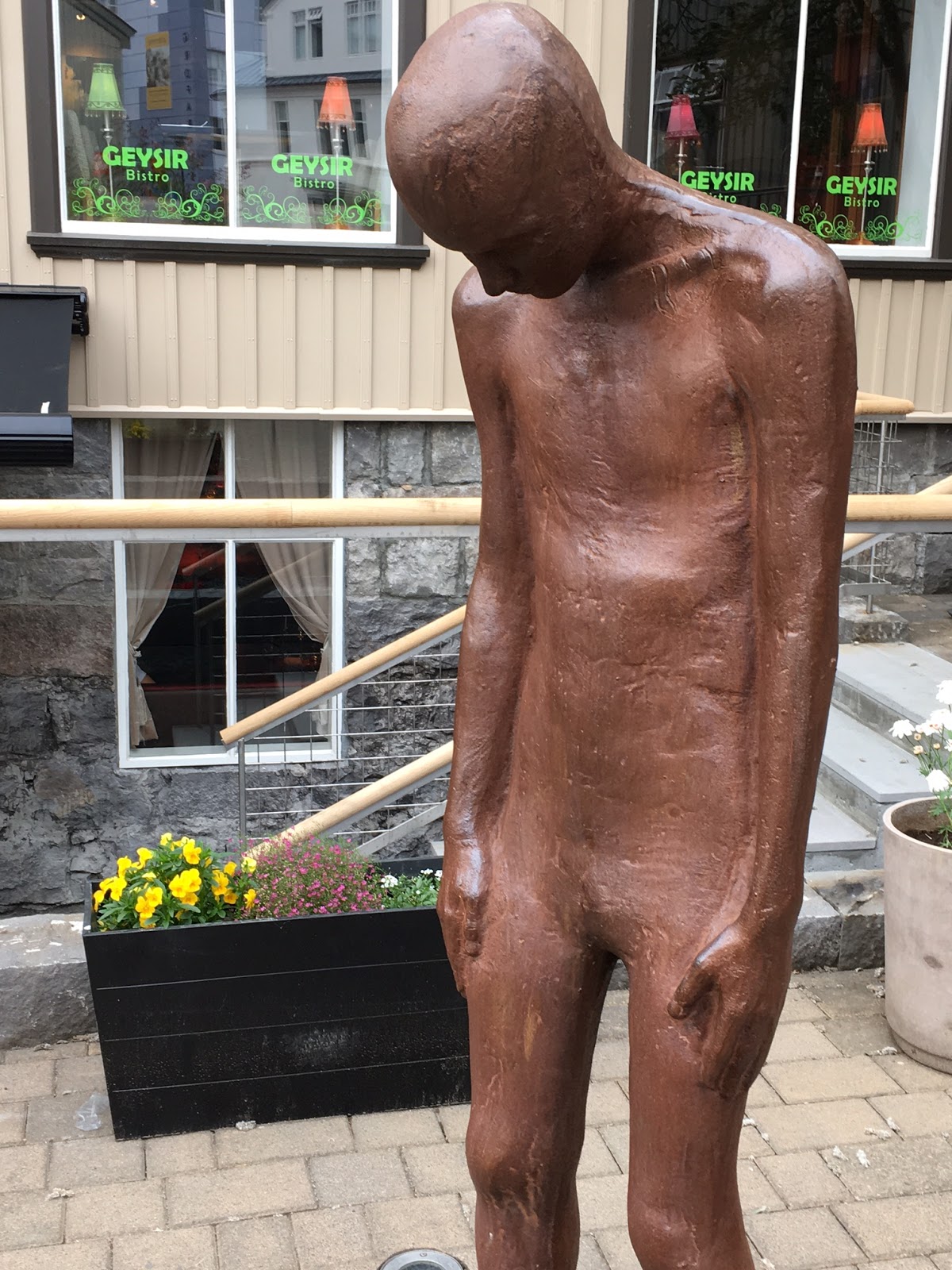
Amy Kumm-Hanson: The incarnational nature of Chaplaincy

photo: A.Kumm-Hanson, Iceland 2016

From Amy Kumm-Hanson; I thought her words spoke a great deal about the difference between the nature of Chaplaincy and its place in ministry.

Chaplaincy is not a cerebral ministry of long hours spent in a pastor’s study in preparation for preaching. It is holding hands through bed rails and wearing isolation gowns and being willing to literally stand in suffering with God’s beloveds. It is not about translating Hebrew or Greek from ancient texts, but about translating scripture into something now that matters to the mother who is delivering her stillborn child or the son losing his father to cancer.

The theology of the cross is particularly apparent to me in my hospital work. This theology holds that God’s love for all of creation is most clearly seen in the act of dying on the cross.  That God did the most human thing of all, which is to die. The theological conviction that shapes my ministry as a chaplain is that God knows what it is to suffer and to die, and there is no place that God is unwilling to go, even death. This is good news for all of us who feel immersed in suffering, our own or that of others.

Read her whole post here.

Is CPE broken? Reconsidering the “CPE horror story”

anyone having flashbacks to their CPE supervisor’s office?

If you Google “CPE” chances are pretty good that it will start autofilling “horror stories” in the search box. It seems like there are much more stories about bad experiences in CPE than good. Perhaps this is just bias toward the negative, but it certainly does seem to be that CPE is not a good experience for many.

If you follow that search you’ll see why. I read stories about supervisors that destroyed boundaries and exercises designed to tear people down in front of their peers. One person even wrote that “Clinical Pastoral Education is nothing more than a systematic ‘weeding out’ of orthodox seminarians through a process of enforced radical leftist indoctrination.” It’s criticized as being unnecessary, unhelpful, “navel-gazing”, pseudo-psychoanalysis. So why is it still required for those entering ministry? Is there something wrong with the program? Are supervisors adequately trained and supervised themselves? Or are seminarians missing the point of CPE entirely? Continue reading

Chaplain Certification: APC vs CPSP vs … SCA??

perhaps we need to drag the shirt out again

So I’ve written several times on the topic of board certification for Chaplains, especially regarding APC/BCCI and CPSP. Those weren’t the only players on the certification game, though. There are certification programs through the National Association of Catholic Chaplains and Association of Jewish Chaplains for example, as well as a smattering of other groups and agencies. Some have been around for a while and are well recognized, while others you will probably never hear of unless you look for them. The newest group to organize and enter the board certification mix has caused controversy though. Continue reading

“Hope can harm dying patients”: F. Perry Wilson on Doctors, Families and Misplaced Hope

Our humanity, as well as our caring nature, often calls us to be sources of strength and encouragement to those who are in crisis. This is true of Doctors, Chaplains, Nurses – in fact the whole hospice team. We hate to be the ones delivering bad news, especially when we feel like the other needs comfort rather than reality when reality most likely is going to be awful.

F. Perry Wilson, MD, MS

Dr. F. Perry Wilson, in a video report on MedPageToday, reports on a recent study concerning what doctors and surrogates believed a terminal ventilator patient’s chances of survival to be. The study found major discrepancies between doctors and families, and while doctors were often more accurate in their assessment that knowledge was rarely transferred to the families in the study. Families were often too optimistic regarding chances of survival. There were several factors involved in this, including religious belief or hope for a miracle, the need to not “give up”, and even magical thinking (“If I circle 50% it might be true”).

The study and analysis reveal how medical clinicians and supporters, including Chaplains and Social Workers, can reframe “hope” to mean hope in a peaceful death rather than hope for a full recovery.

One piece of the puzzle that was not addressed was that this unwarranted optimism could easily be seen as part of the grieving process for families. While education about realistic expectations is certainly necessary and needed, resistance to this advice in favor of “hope” shouldn’t just be written off.  Denial, bargaining and magical thinking are part of the grieving process and may show that they are trying to wrestle with acceptance rather than avoid it.


Peter Singer, Blackmore and Weikart Discuss: Does Life Have Intrinsic Value?

Peter Singer, Richard Weikart, and Susan Blackmore

source: Premier Christian Radio

For those of us in hospice settings, the notion of “quality of life” is very important. There is disagreement however concerning what or who actually gives that life quality. This podcast from the UK program Unbelievable?  tackles both sides of the issue of what gives life value. Peter Singer and Susan Blackmore uphold the notion that life has no intrinsic value from a Creator, only from the value one derives from it, while Christian author Richard Weikart takes the opposite view. It’s a very good conversation with both sides taken seriously, and I was especially glad to hear from Peter Singer as his views are often shrouded in controversy. Click on the image above to be taken to the podcast page or click here. I hope you find it insightful.

Share your opinions below!


Why Certification Makes a Difference for Chaplains

The question of the necessity of certification is common today among chaplains, especially those who are already working as a chaplain in the field. During my CPE experience all of us were encouraged to go on to be certified. It was the “gold standard” and would put you ahead of someone who isn’t certified. After completing my four units and having all of the paperwork I needed mostly done (verbatims, theology papers, biography) I didn’t bother getting certified for several years. It just didn’t seem necessary. Continue reading

Crossing Divides: Can an Atheist be a Chaplain?

Can an Atheist be a chaplain?

It may seem like a ridiculous question, I know. However Great Britain recently named its first “Non-Religious Pastoral Carer” within its national health system. This sparked debate about whether or not it’s even possible for a non-religious person could technically be a “chaplain” given that the title itself has an obvious religious connotation.

While the argument is interesting, I don’t find it very helpful though. It becomes an argument about semantics and definitions. But frame the question this way and I think it gets interesting: Can someone of one faith provide spiritual support to another of a different faith, or of no faith at all? Put it that way and I think you are getting to a core question for those serving in Chaplaincy already, as well as those planning for ministry. Continue reading