Hospice Chaplain Myth #4: It’s All Emergencies

With hospice being all about death and dying you’d think that it be all panic all the time. After all if everyone is dying then everyone is in crisis.

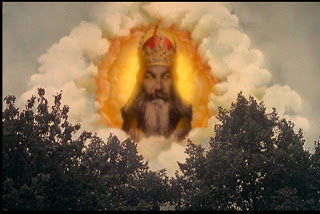
The truth is that “dying” is much more of a continuum in hospice care. Everyone is dying to some degree, but not everyone is on the brink of death. Hence the Monty Python and the Holy Grail bit.

Dying can take place over months, with gradual withdrawal and decline followed by more acute symptoms within the last few days. Of course it can also happen very suddenly, with almost no warning at all. I still remember seeing a new patient at the hospital who had just come on. She was complaining bitterly about pain in her back. The nurse had already given her some medication, so we thought re-positioning her would help the pain. We rolled her on her side and put a pillow under her shoulders. As she was no longer upset we thought we had helped. It turned out that she had just died.

Most of my visits are relatively routine, with side tracks for new admissions and schedule changes here and there. There are occasional emergencies of course. But even these emergencies are unique each time. A person dying isn’t necessarily an emergency on its own for example. If the family is struggling or the patient is having problems those are emergencies. But a patient dying comfortably under the care of trained staff isn’t an emergency. I get some strange looks whenever I tell a family that a patient is “doing pretty well” as they’re dying. “Pretty well” in this case refers to their dying in comfort without distress rather than being healthy. Sharing that often helps families with their own acceptance and that dying itself can be “ok”.
Hospice Chaplain Myth #3: It’s Depressing

just like those miserable psalms, they’re so depressing!

Last time I wrote about how people chaplaincy isn’t always as fulfilling as it’s perceived to be. Well it’s not so glum either. Chaplaincy, on its good days, is incredibly rewarding.

My sister was a nurse in a transplant ward for several years, and a friend of hers worked in a burn unit at a different hospital. When they talked about their jobs, they often said that they could do the job the other was doing. However they found their own jobs relatively easy to do. Part of this comes with familiarity. When you’re new to something, it’s stressful. However with time those things become mundane – even things that others would find shocking.

The same often happens with hospice. Often I hear family members say that this job must be terribly depressing, given that we deal with death every day. However the truth is that we do not deal with death every day. True we have our share of deaths and emergencies every week, but not necessarily every day. I find that the good days with my patients come more often than the bad ones. Being able to take a patient outside, share a funny story, hear memories from veterans, or be ogled and fawned over by old ladies (which happens in my case) can brighten my own day as much as my patient’s. I find their lives touch my own in so many ways and that I grow so much from them, that I find it hard to be depressed most days.

Hospice Chaplain Myth #2: Fulfillment

Being in hospice means having to travel quite a bit some days. I’ve learned all the places – grocery stores and gas stations especially – that have places to sit down and eat my brought lunch on the go. I remember walking in to a grocery store to sit down and have lunch during a particularly hectic day. I still had my ID on and when the person at the counter noticed that I worked for hospice, he said “you must have a very fulfilling job”.

I remember thinking for a minute, saying “yes it is”, paying for my coffee and sitting down, knowing that I wasn’t sure if I meant what I said.

The truth is that this is a very fulfilling job, some days. But not always, and not often most. Personally, many days are filled with anxiety beforehand about how I’m going to get done what I need to, planning my route so that I don’t end up downtown after 3pm and so on. Some days I can see half a dozen people and feel like I accomplished little else but meet the medicare requirements for my position. Other days I hear of a death of a patient and my first thought is “well at least that’s one stop off my list today!”

Does all this point to burnout? Maybe. Hospice has a high rate of burnout among staff and I’ve seen it happen. Individuals are drawn to hospice work because they are caring and want to make a difference no matter what the cost. This can mean crossed boundaries, late night calls, and overextension. And more often than not it’s those individuals that get the rewards and Kudos – rightfully so for putting themselves out there, but it can also feel to those that try to guard their boundaries and time that they are getting the short end of the stick.

I also feel that sometimes chaplains especially can feel that what they do doesn’t matter all that much in comparison to other disciplines. Nursing runs the show and calls the shots. Social workers can provide counsel and care as well as crisis intervention. Everyone can pray with and for their patients. Medicare doesn’t even necessitate that there is a chaplain on staff – only that spiritual counseling be available. This can make a chaplain feel as if he or she is a bit of a wallflower.

But can chaplaincy be a fulfilling job? Absolutely. The flip side of this myth is also a myth – that what I do doesn’t matter that much. When chaplains do what they are specifically trained to be good at – being present spiritually with another – this can be the most fulfilling job on the planet. Even when you’re sitting at a comatose patient’s bedside for an hour, or taking a demented patient outside for a breath of fresh air that he hasn’t had in probably six months, when it’s done in the proper mindset these can be incredibly fulfilling.

But the day-to-day often gets in the way. Being mindful of my own cares and worries and trying to put them aside when I’m with a patient makes a big difference in terms of how I perceive my contribution to their care.

Another sample CPE Verbatim: Depression and Significance

I thought I’d throw another of my verbatims out there as a sample, Feel free to read over and comment. Just remember that I OK all comments so don’t bother being an idiot.

Samuel Blair                                                                                                                  Verbatim 4

Date of visit: 11/18/10

Length of visit: 30 minutes (1:15p-1:45p)


1)       Theme:  An emotional theme that came up during this visit was one of disappointment and sadness.  I felt this coming through the visit and the patient expressed herself in such a way that I was able to empathize with her rather quickly.  I felt her disappointment and sadness during the visit and left me feeling both with and for her.

Continue reading

Hospice Chaplain Myth #1: Deathbed Confessions

I’ve had more than one person tell me, when I tell them what I do, that they expected that I had many people who in the last part of their life made some sort of deathbed confession. In the last 10 years of my ministry in hospice I can say that I cannot remember a single time when I was called over to some patient’s bedside as they mended their ways and repented.

The first reason is simply practical: most of the folks we have on hospice are in no condition to confess anything. Due to dementia or stroke, many are left not being able to understand or be understood. Also many who are in the beginning stages of dying are too weak to do so and are unresponsive or comatose.

The second is coincidental: folks who choose hospice aren’t typically afraid of dying. They’ve accepted it, and with that acceptance comes a resolution to let happen what is going to happen. Those with faith of some kind, weak or strong, haven’t felt the need to confess to me as they’ve already confessed to God or to their own priest.

I have dealt with guilt, anger, depression, and all of the other aspects of grief that come from dying. However by and large their haven’t been the touching deathbed confessions that you see on TV or in movies.

Ideology and prejudice: when does free speech become hate speech?

I’ve noted, as you probably have as well, that civil discourse in this country especially around political issues is almost impossible to find on the Internet. Here’s a sample from some comments on a recent article on Salon.com:

“Rot in hell authoritarian scum.”

“Authoritarian progressives are the worst sort of humanity”

“You right-wingers are the most despicable cowards on the planet.”

“you gun freaks need to sit down and STFU you are a dumb ass”

This is only a fraction of the over 500 comments on the article. Sure not all were this blatantly abusive, but spread this vitriol over the entire internet and you can see how bad things are. Continue reading

Joshua 4: Message for a facility memorial service

I thought I’d pass this recent message from a memorial service our hospice hosted at a personal care facility. They had started a rock garden and we donated a tree to serve as a memorial marker.

…Joshua said to them: “Cross over before the ark of the Lord your God into the midst of the Jordan, and each one of you take up a stone on his shoulder, according to the number of the tribes of the children of Israel, that this may be a sign among you when your children ask in time to come, saying, ‘What do these stones mean to you?’ Then you shall answer them that the waters of the Jordan were cut off before the ark of the covenant of the Lord; when it crossed over the Jordan, the waters of the Jordan were cut off. And these stones shall be for a memorial to the children of Israel forever.” Joshua 4:4b-7

This scene marks a pivotal point in the history of Israel. This nation of former slaves has survived forty years in the wilderness, scraping by only at times by means of miraculous intervention, to arrive at the land promised to them several generations before. Nobody who heard that promise is alive to see it fulfilled. Even Moses, who lead the bedraggled group for those 40 years and who was for all that time their closest connection to God, died before this scene. This nation of nomads has finally arrived at the end of their journey from slavery to freedom.

Continue reading

How Not to Say or Do the Wrong Thing

I chaplain friend of mine passed this article along from the LA Times:

How not to say the wrong thing

It works in all kinds of crises – medical, legal, even existential. It’s the ‘Ring Theory’ of kvetching. The first rule is comfort in, dump out.

Susan Silk and Barry Goldman

April 7, 2013

When Susan had breast cancer, we heard a lot of lame remarks, but our favorite came from one of Susan’s colleagues. She wanted, she needed, to visit Susan after the surgery, but Susan didn’t feel like having visitors, and she said so. Her colleague’s response? “This isn’t just about you.”

“It’s not?” Susan wondered. “My breast cancer is not about me? It’s about you?”

The same theme came up again when our friend Katie had a brain aneurysm. She was in intensive care for a long time and finally got out and into a step-down unit. She was no longer covered with tubes and lines and monitors, but she was still in rough shape. A friend came and saw her and then stepped into the hall with Katie’s husband, Pat. “I wasn’t prepared for this,” she told him. “I don’t know if I can handle it.”

This woman loves Katie, and she said what she did because the sight of Katie in this condition moved her so deeply. But it was the wrong thing to say. And it was wrong in the same way Susan’s colleague’s remark was wrong.

Susan has since developed a simple technique to help people avoid this mistake. It works for all kinds of crises: medical, legal, financial, romantic, even existential. She calls it the Ring Theory.

Draw a circle. This is the center ring. In it, put the name of the person at the center of the current trauma. For Katie’s aneurysm, that’s Katie. Now draw a larger circle around the first one. In that ring put the name of the person next closest to the trauma. In the case of Katie’s aneurysm, that was Katie’s husband, Pat. Repeat the process as many times as you need to. In each larger ring put the next closest people. Parents and children before more distant relatives. Intimate friends in smaller rings, less intimate friends in larger ones. When you are done you have a Kvetching Order. One of Susan’s patients found it useful to tape it to her refrigerator. Continue reading

1 Corinthians 13:1-7, for a funeral


1 Cor 13:1-7 If I speak in the tonguesof men and of angels, but have not love, I am only a resounding gong or a clanging cymbal.2If I have the gift of prophecy and can fathom all mysteries and all knowledge, and if I have a faith that can move mountains, but have not love, I am nothing.3If I give all I possess to the poor and surrender my body to the flames, but have not love, I gain nothing. 4Love is patient, love is kind. It does not envy, it does not boast, it is not proud.5It is not rude, it is not self-seeking, it is not easily angered, it keeps no record of wrongs.6Love does not delight in evil but rejoices with the truth.7It always protects, always trusts, always hopes, always perseveres.

These words are often heard at weddings, not at funerals. But they are just as appropriate. In marriage we see the romantic side of love, the love of one for another. But in reflecting back over an entire life we can see how that love flowed out to others, to see the hard work that it did in tough times, and to see that love is not merely something that is felt but something that one does.

When Paul wrote to the Corinthian church, he was writing to a church divided. There were rival groups fighting for attention and power while more serious issues were being ignored. They were boasting about their wisdom and knowledge, but Paul was pointing out that their wisdom was futile. The church was “majoring in the minors” to borrow a phrase. Paul responds to a number of their questions about the order of the service and so on, points out where he sees them in error. And then it’s at this point that he points them to the “why” behind the “what to do”. Continue reading

Faith and Dying Well

I recently came across an article on a Christian site discussing why it is that Christians seem to have so much difficulty with end of life choices such as hospice care (unfortunately I can’t link to the article right now as I can’t find it again).

As a hospice chaplain for seven years I can say the following:

  1. most of my patients and families have some kind of faith background, and I would guess that it is about 90% Christian
  2. about half of my Christian patients are Roman Catholic
  3. of those that can tell me, most of my patients are not afraid of dying and neither are their families.

That said, I would say that obviously not all Christians die poorly, and a good number are quite accepting of God’s plan and, even when there is a very real fear of the dying process, that fear is tempered by the hope of Heaven.

However this is only a sample of those who have already chosen hospice. It would stand to reason that patients and families that are in some way afraid of dying or the dying process don’t consider hospice at all. One would think that this group is mostly atheist/agnostic and so on, but I don’t think that’s the case. I’ve had atheists on service before, and they look at death as a release from their pain and struggle and accept it as part of life. On the flip side of the coin, there are many Christians who struggle with decisions at the end of life and hang on even when recovery is impossible. The “why”s in these cases are plentiful I’m sure, but faith itself itself can be one. Continue reading