What Does it Mean to “Trust the Process”?

In any kind of Clinical Pastoral Education experience, you will probably hear this phrase at least once: “trust the process”. I know I heard it several times in my own CPE classes, and it was never spelled out what it meant to “trust the process”.

That is part of trusting the process.

Many seminarians enter CPE because they have to, because they want to enhance their pastoral care toolbox, or enhance their resume. I’m not going to pan these reasons at all. They are all good reasons to take a CPE unit. However this is only part of what CPE does. The tools and materials used in CPE to help develop interpersonal caregiving skills – books, group work, role-play, writing essays and reports, films – are also designed to work intrapersonally as well. When entering in to the work at first, the focus is outward. We come to learn to help others, to manage others’ crises better, and see how caregiving fits in to our theological and scriptural paradigms. Continue reading
Poignant Thoughts on Suicide Among Physicians

While perusing some articles I found this on KevinMD. It brought me back to a prior post I had concerning burnout among caregivers. I think it has insights not only for those of us who serve as caregivers but to those who work with and among caregivers. Read on after the jump:

Continue reading

The Dying Art of Pastoral Care

I may have said this before, but I think pastoral care is a dying art.

The evidence for this is overwhelming, at least from my vantage point. Seminaries demand multiple years of attention to developing skill and knowledge in exegesis, languages, hermeneutics, and preaching, but I doubt if most require more than a semester devoted to pastoral care issues such as counseling and crisis management. I’m thankful that at Yale Divinity School I was able to focus my attention on this area, and that it offered several different courses on pastoral care and counseling to different groups. I had a great deal of freedom to do this in that I was not tied to denominational requirements. I didn’t take any languages because I never saw myself as an exegete to that degree. However most of the other students there were following programs to meet their respective denominations’ requirements. In some cases this required a semester of pastoral care or CPE, but I don’t know if that was across the board.

When did ministry become an academic exercise, focused primarily on sermon writing and exegesis? When did ministry become a business for that matter? When did pastoral care become something that only happens in a couple marriage counseling sessions or when talking with a family about what songs or scriptures they want at their dad’s funeral? When did pastoral care get assigned to lay volunteer prayer and care groups, who may get little if any training or support beyond a space and time to meet at the church? When did clergy become too busy managing the church to provide care to the people in that church? Continue reading

Love Does Strange Things, or How I Got a Cup of Cremated Remains From Pittsburgh, PA to Newfoundland, Canada

The following is an essay I wrote for a friend of mine, Shane Blackshear, who hosts the podcast Seminary Dropout. I highly encourage you to check out his page and podcast. Oh – and upgrade your book budget as the authors and speakers he interviews will undoubtedly make you want to fill your shelves with their insights.

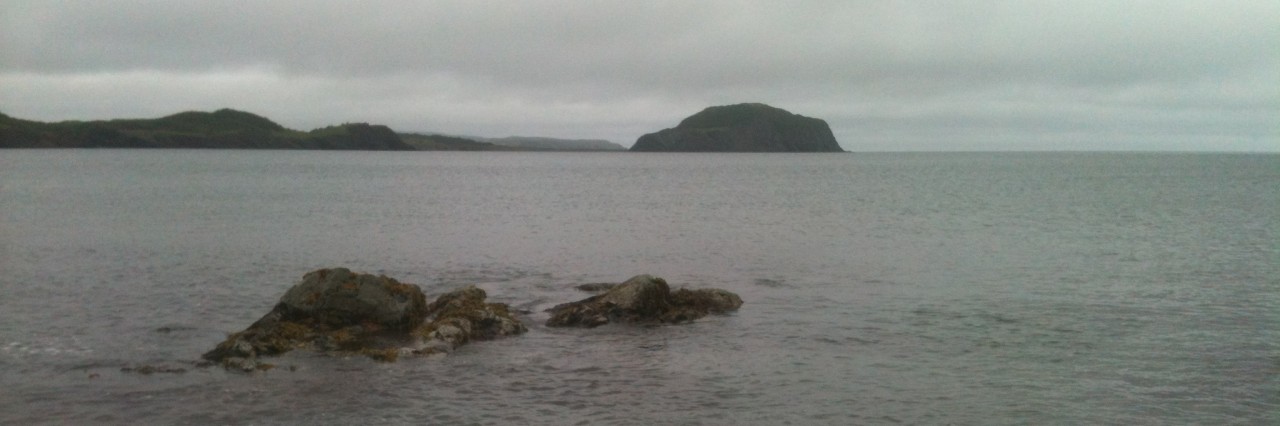
view of Fox Island, Newfoundland, Canada

view of Fox Island, Newfoundland, Canada

As anyone who is – or has been – on love will tell you, love isn’t just an emotion you feel for someone else. It sometimes captures you to the point where you will do just about anything for that person. It’s not always romance that produces this feeling, but it’s instead the kind of love that comes from losing yourself, which is what true love is and does. Sometimes it looks like spending hours crafting a poem or writing a song for that person. In this case it looked like smuggling a dead man’s ashes across international boundaries on a passenger jet. Continue reading

Too Close to Home: Hospice workers and personal loss

Within the past 6 months two of the nurses I work with lost their mothers. In both of these cases, they chose to have their mothers on our hospice.

This is a very hard thing to do. It was awkward for a while for all of us at team especially to be referring to and discussing someone in a very clinical manner, yet knowing that this was a team member’s mother. Yet it was also a good reminder for all of us that all of our patients are someone’s mother, father, brother, sister, or even child.

The awkwardness goes away after a brief time. However when that loss finally happens it can be devastating, not only to the family member but to the whole team. Continue reading

Snowpiercer, Ferguson and the Incarnation

(this is a departure from my usual ramblings – and a bit longer – so bear with me)

Be a Shoe

I saw the movie Snowpiercer a few weeks ago after hearing a bit of buzz about it and reading both graphic novels (it’s on Netflix now by the way). I found it a very thought-provoking movie on many levels. Many reviewers hit on the environmental themes in it, while you can also see themes about meaninglessness vs. purpose in there as well (the stolen children who maintain the engine’s inner workings, thus keeping everyone alive). It’s definitely a movie that offers many layers and provokes a lot of thought. A prevailing theme easily apparent throughout is that of class exploitation as well as the limits of revolution. It’s a very dark film, filled with the kind of violence fueled by despair of those in “the tail”. Unfortunately it bears a very strong resemblance to our own world. Continue reading

Verbatim: Being good to the person in the mirror

At my recent CPSP meeting I presented this verbatim and got some new insights from the group. I’m going to shorten it a bit just to make it easier to read.

This happened quite some time ago and when my colleagues asked why I brought it up I responded that it deals with things that I still deal with today: self-care, tiredness, and burnout.

The patient in this visit, Mrs. S, is 67 years old and has been on hospice now for a few months. She has a history of alcoholism and is on hospice for chronic pain and malnutrition. She is extremely thin and emaciated even though she eats fairly well. She smokes regularly 3-4 times a day. She is a widow and has children but they are not involved with her and she does not want them contacted. Mrs. S is Roman Catholic but has not attended church in some time. She maintains her own prayer practices and she says that she finds these comforting. She almost always presents herself as happy and content unless she is in pain, and even then she tends to minimize her pain. Her pain is regularly 8 out of 10. She is very friendly but not always open regarding her own feelings, family and past. She tends to use humor to divert attention and make light of her situation. She is frequently in bed as this is most comfortable for her. Continue reading

Why I’m a Chaplain – III: “The Church” and the wandering path

At one point in my life I had wandered away from my faith. Not wandered, more like stormed out to be honest. That’s a whole other issue. I came back though, and a big reason I came back was I attended a Christmas service at a large megachurch here in Pittsburgh that changed my perspective on myself and my relationship with God. I started attending and joined about a year later. Continue reading

Inerrancy, Nature and Scripture

While flipping through the radio stations the other day I came across a message by R. C. Sproul. He was speaking about philosophy, science and scripture and told an interesting story. In his seminary classes, whenever he asks who thinks the bible is inerrant every hand goes up. However when he asks if nature, as another revelation of God, is inerrant, there is a lot more hesitation. He raised an interesting question: why are some Christians so suspicious of nature as a means of God’s revealing Himself?

“Well because nature is fallen, dummy.”

“But even in it’s fallen nature, does it tell us something incorrect about God? Does nature lie?” Continue reading